 Translate
BMI Calculator – Calculate BMI, Healthy Weight, Calories & More
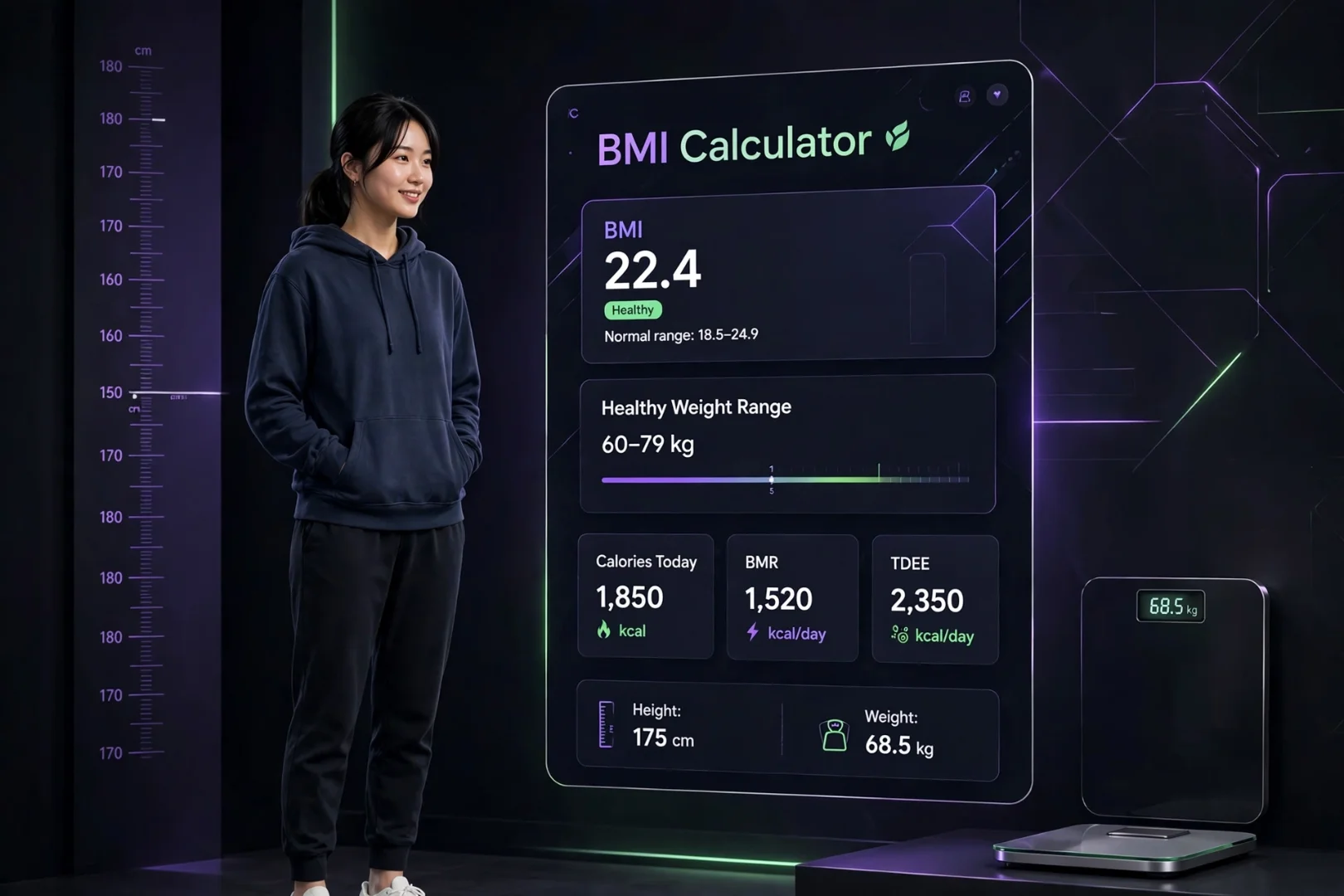
BMI Calculator – Calculate BMI, Healthy Weight, Calories & More
You step on the scale. You look at the number. And then comes the question that hits almost everyone at some point: "So... is that okay?"
Here's the thing — that number means nothing on its own. 80 kg can be perfectly healthy for one person and a concern for another. It all depends on your height. That's exactly what BMI solves. It compares your weight with your height and gives you one simple number that tells you where you stand.
But most BMI calculators online stop too early. They show you a number, maybe a color, and leave you hanging. Okay... my BMI is 26. Now what? What do I eat? How much water should I drink? How long until I see a change?
Our free BMI calculator at useminitools.com was built to answer the "now what."
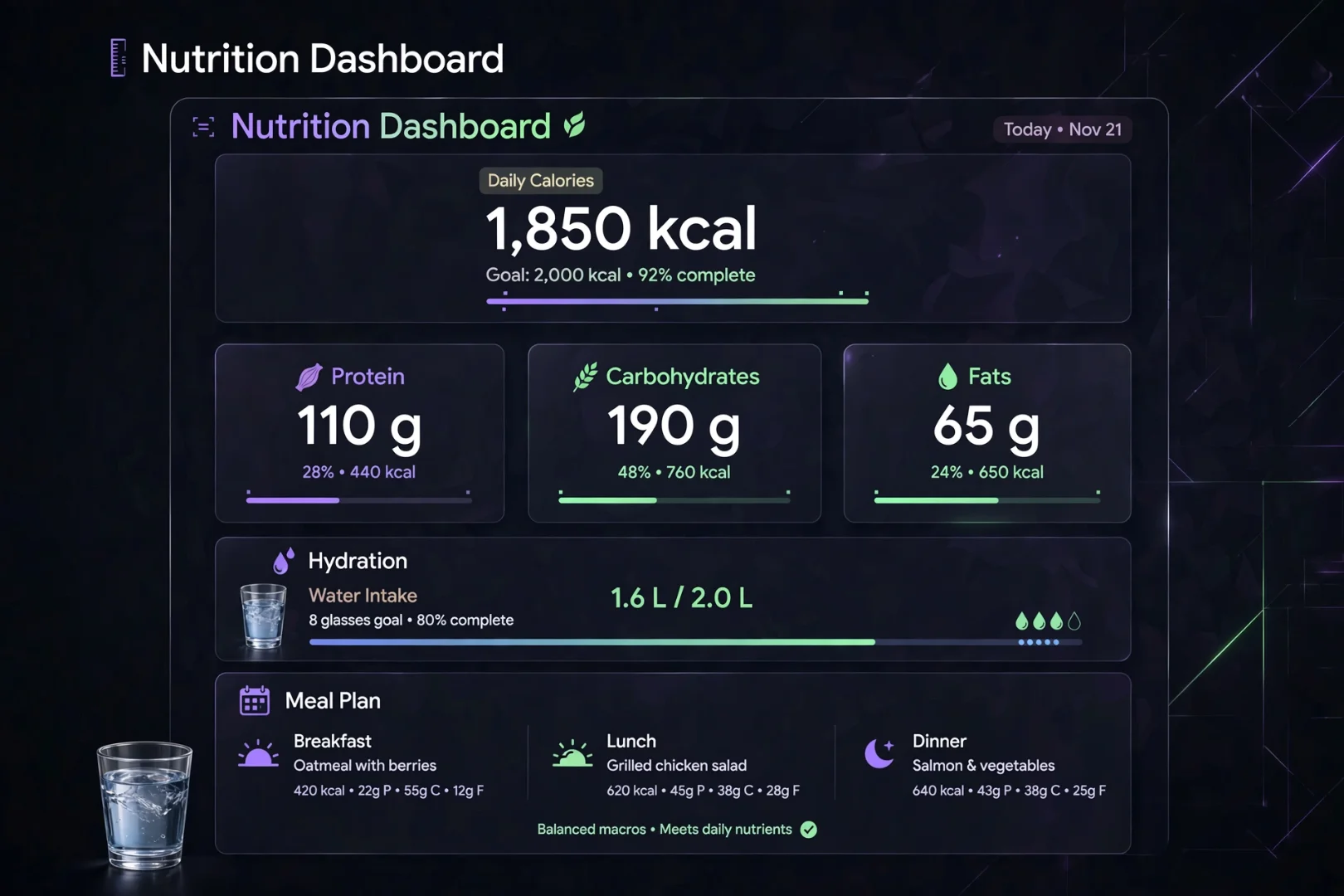
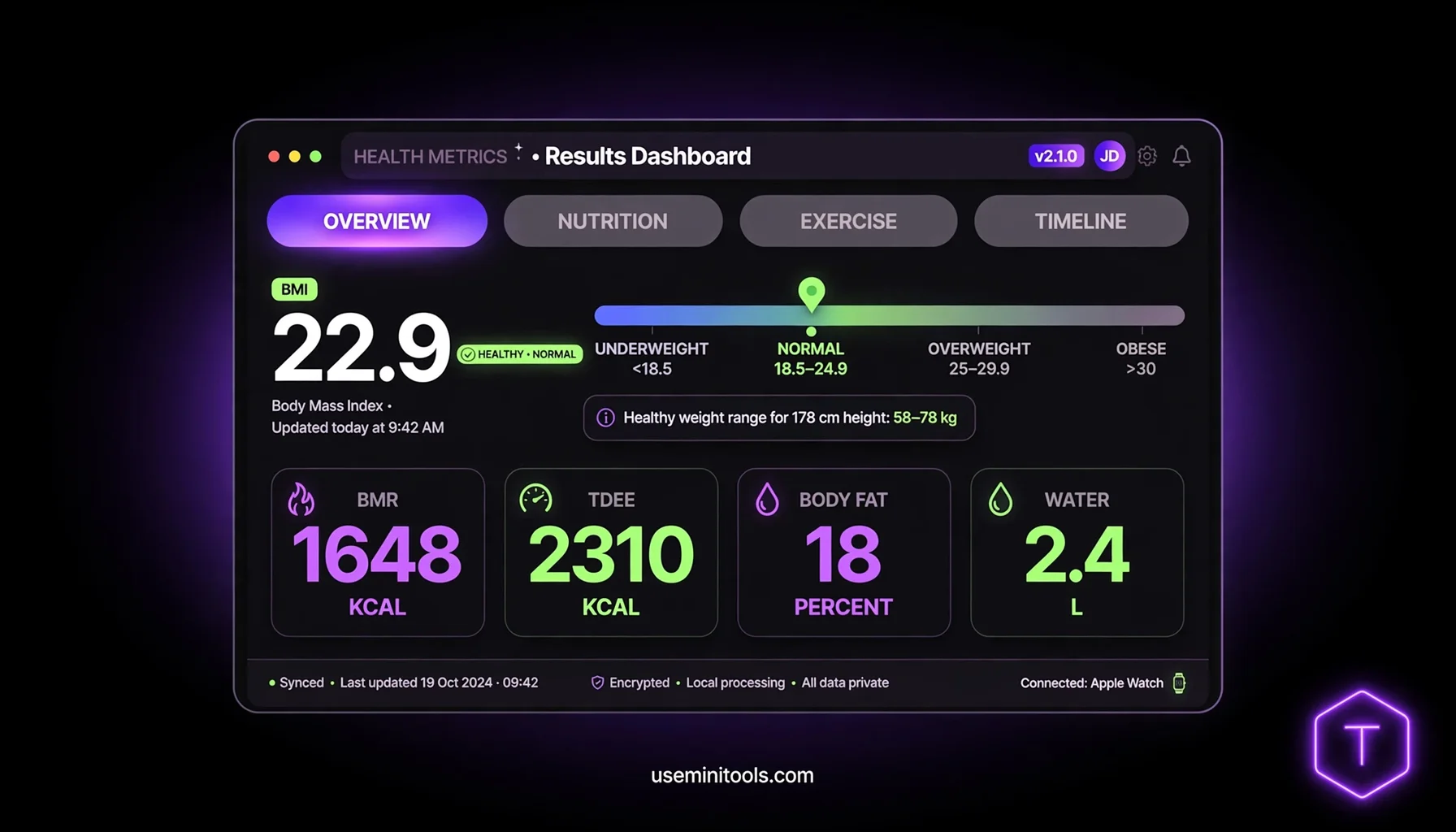
After you enter your weight, height, age and gender, you also pick your activity level, your goal (lose weight, maintain, or gain muscle), your preferred diet and even your exercise style. The calculator then builds a full plan around your body: your BMI, BMR, TDEE, a healthy weight range, a daily calorie target, macronutrients, water needs, sleep recommendations, an estimated body fat percentage and a progress timeline.
One form. One click. A complete plan.
What Does a BMI Calculator Actually Measure?
BMI stands for Body Mass Index. It uses your weight and height to produce a number that can be compared with established BMI categories.
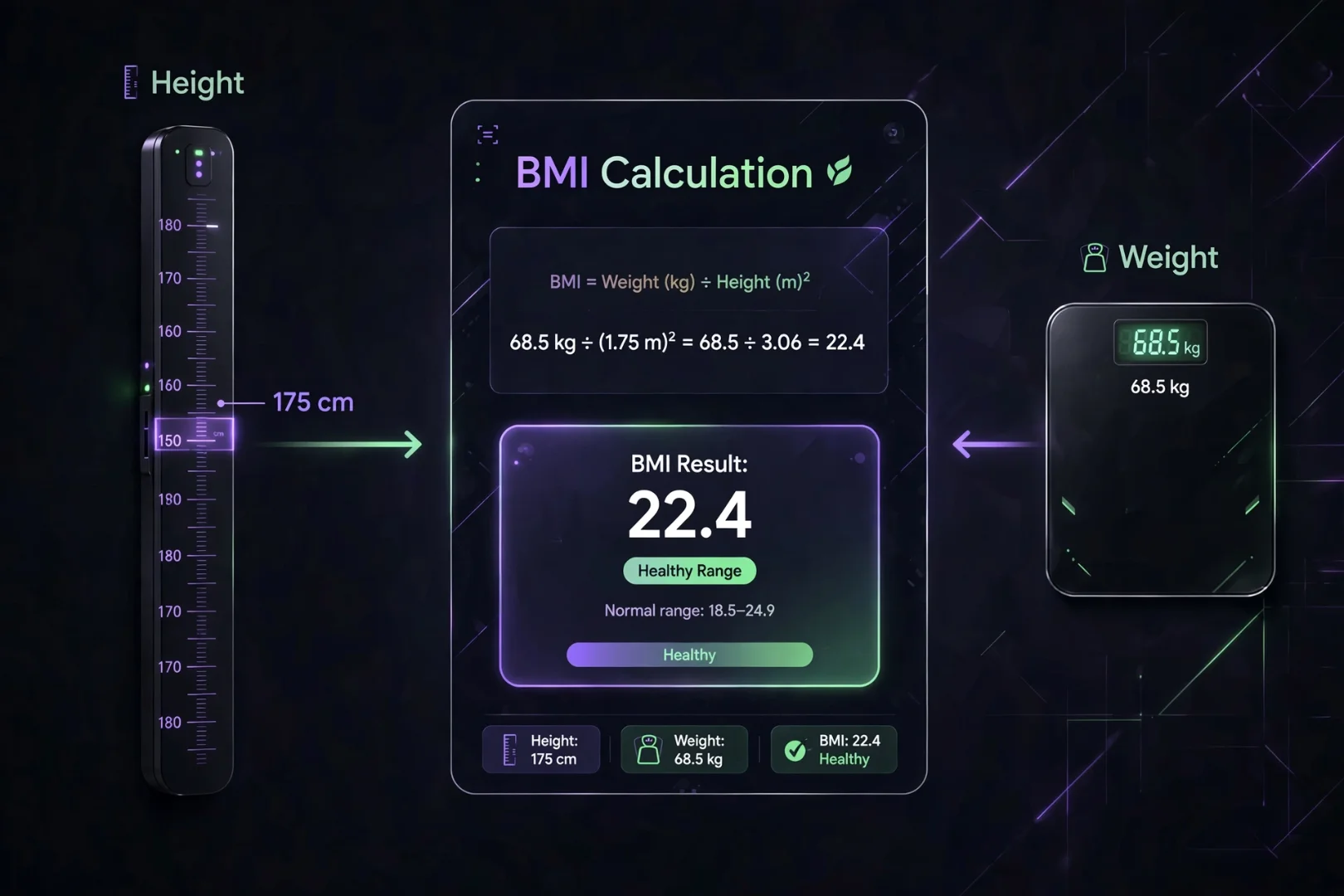
The basic metric formula is:
BMI = weight in kilograms ÷ height in metres²
For example, someone weighing 70 kg and measuring 1.75 metres tall would have a BMI of about 22.9.
The important thing to remember is that BMI is a screening measurement, not a complete assessment of your health. It does not directly measure body fat and cannot distinguish between muscle and fat. A person with a high amount of muscle, for example, may have a higher BMI without having excessive body fat.
That makes BMI useful as a starting point, but not something that should be treated as the final answer about your health.
What This BMI Calculator Can Calculate
This tool is designed to give you more context than a basic BMI chart.
BMI
The calculator first works out your BMI and presents the result to you through the Overview section. It calculates the value from your weight and height and displays it to one decimal place.
Healthy Weight Range
Instead of only showing your current BMI, the calculator also estimates a healthy weight range for your height. This is the part most people secretly want to know: not just "where am I now" but "where should I be?" Seeing the gap between the two — or seeing there is no gap — is often the moment everything clicks.
BMR
BMR stands for Basal Metabolic Rate. In simple words: it's the energy your body burns just by being alive — breathing, pumping blood, keeping you warm, even on the days you do absolutely nothing.
The calculator estimates it using your weight, height, age and gender. It's the foundation for everything else in your plan.
TDEE
TDEE means Total Daily Energy Expenditure. Think of it as your BMR plus your real life. The calculator takes your BMR and adds your chosen activity level to estimate how many calories you burn on a normal day.
This is your magic number if your goal is to maintain your weight. Eat roughly this much, and your weight stays put.
Calories and Macronutrients
Now the useful part. You pick one of three goals:
Lose Weight
Maintain
Gain Muscle
If you pick weight loss or muscle gain, you also choose a pace that feels realistic for you — not the aggressive one some apps force on everybody.
The calculator then uses your TDEE, your goal and your pace to estimate your daily calorie target. On top of that, it calculates suggested macronutrients based on your calorie target, goal, diet preference and weight.
So instead of asking Google "how many calories should I eat to lose weight?" and getting 47 different answers, you get one clear number made for your body.
How to Use the BMI Calculator
Using the calculator takes only a few steps.
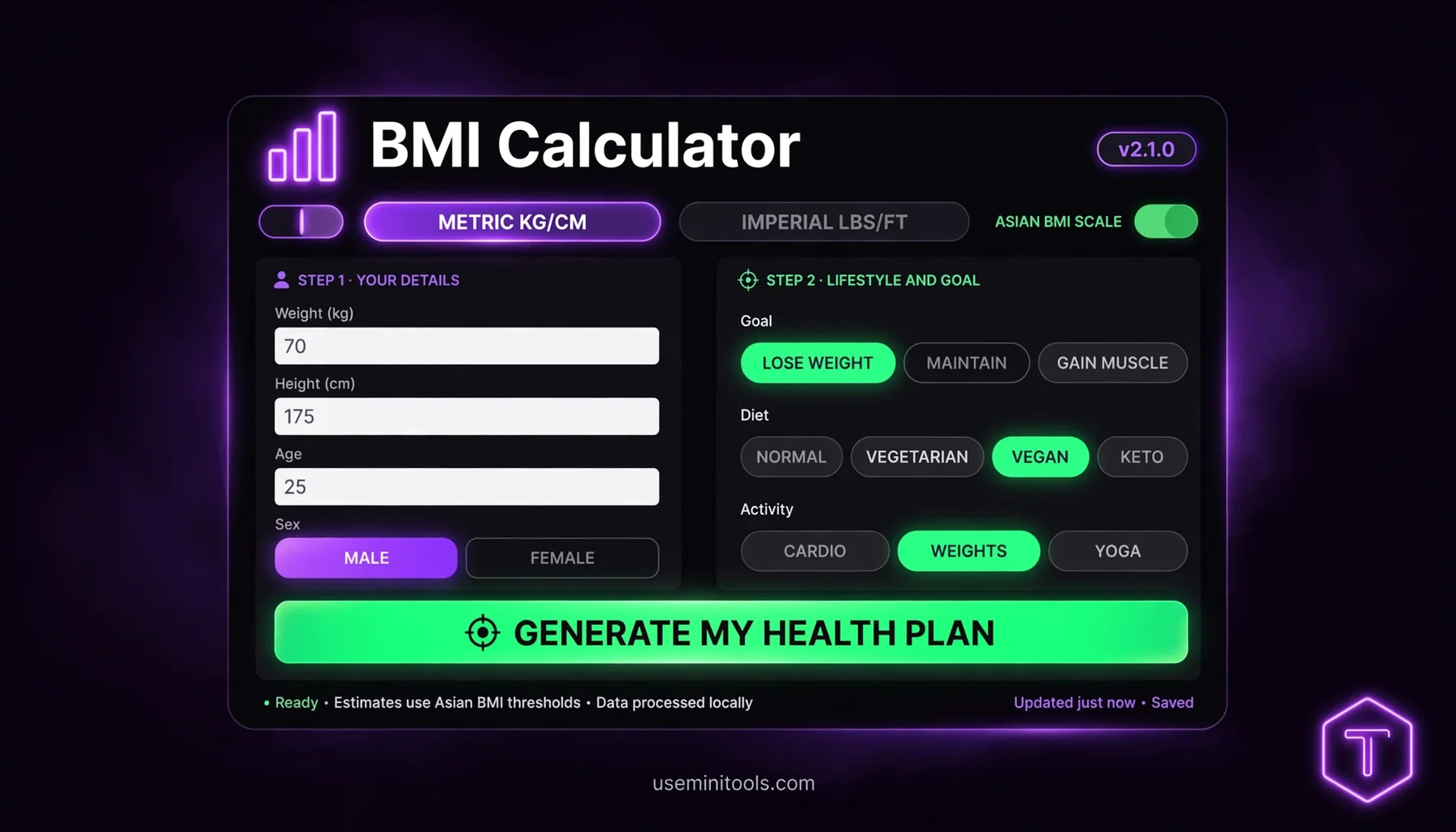
1. Choose Your Unit System
You can use Metric (kg/cm) or Imperial (lbs/ft) measurements. The imperial option accepts weight in pounds and height using feet and inches.
2. Enter Your Basic Details
Enter your:
Weight
Height
Age
Gender
The calculator checks that the values are valid and greater than zero before calculating your results.
3. Choose Your Activity Level
Select the activity level that best represents your normal lifestyle. The available activity levels are used when calculating your estimated TDEE.
4. Select Your Goal
Choose whether you want to lose weight, maintain your current weight or gain muscle.
For weight loss and muscle gain, you can also choose a preferred pace.
5. Select Your Diet and Exercise Preferences
The calculator provides four diet choices:
Normal
Vegetarian
Vegan
Keto
You can also select an exercise preference such as cardio, weights, both or yoga.
6. Generate Your Results
Click Generate My Health Plan.
Your results will appear in four sections: Overview, Nutrition, Exercise and Timeline.
What You Get in the Results
When you click "Generate My Health Plan," your results open in four clean tabs — and each one has a job to do.
The Overview tab gives you the headline numbers: your BMI, BMR, TDEE and more, all in one glance.
The Nutrition tab is built around the goal and diet you selected. Tell the calculator you're vegan and want to lose weight — that's exactly the plan it gives you. Not some generic one.
The Exercise tab matches your fitness preference and adds two things most calculators forget: your estimated daily water needs and a sleep recommendation based on your age. Because getting healthier was never only about food and workouts.
The Timeline tab is the motivator. It estimates your progress based on your current weight, goal and pace — so you can see where you could be in the coming weeks, not just where you are today.
The calculator also estimates your body fat percentage.
One honest note: these are smart estimates based on your inputs, not medical measurements. Treat them as a helpful guide, not a doctor's report.
Using the Asian BMI Scale
Here's a feature you won't find on most BMI calculators: a built-in Asian BMI Scale toggle.
Why does this matter? Because standard BMI categories don't fit everyone equally. Research and health resources have long discussed lower BMI action points for Asian populations, because some health risks can appear at lower BMI levels.
Here's how it works: flip the Asian BMI Scale switch on before you generate your results. The BMI number itself is still calculated from your height and weight — what changes is how that number is interpreted.
If you're not sure which standard fits you — especially if you have an existing health condition — use the calculator as a starting point, then talk to a qualified healthcare professional. They know your full story. A calculator only knows what you type in.
Why BMI Should Not Be Your Only Number
BMI is convenient because it is simple. That is also its biggest limitation.
It does not tell you how much of your weight comes from muscle, fat or other body tissues. It also does not provide a complete picture of factors such as waist circumference, blood pressure, blood sugar, fitness level or existing medical conditions.
For this reason, a BMI result should be viewed as one piece of information rather than a diagnosis. Health organizations describe BMI as a useful screening measure, but additional information is needed when assessing an individual's health.
This is particularly important for athletes, people with substantial muscle mass, older adults and anyone whose health situation makes a simple height-and-weight calculation less representative.
A Better Way to Use Your BMI Result
Most people use a BMI calculator like this: type numbers in, look at the result, feel something, close the tab. Don't be most people. :)
Instead of only asking "Is my BMI normal?", use your result as a launchpad:
If your goal is weight loss, look at your calorie target and progress timeline together with your BMI. That's your roadmap.
If you want to maintain your weight, your TDEE is your best friend — it's a solid estimate of what your body needs every day.
If your goal is muscle gain, pair the calorie and macronutrient estimates with the Exercise tab. Muscles need fuel and a reason to grow.
One number tells you where you are. The full plan tells you where you're going. That's the difference.
Related Tools for Your Health and Fitness Goals
BMI is only one part of the bigger picture. Once you know your BMI, you may also want to look at other factors such as your age, sleep schedule, and daily calculations related to your fitness goals.
Here are a few useful tools you can use alongside the BMI calculator:
Sleep Cycle Calculator: If you want to improve your sleep routine, this tool can help you understand suitable sleep and wake-up times based on sleep cycles.
Age Calculator: Age is one of the details used by the BMI calculator. If you need to calculate your exact age from your date of birth, this tool provides a quick result.
Percentage Calculator: Useful when you want to work out percentage changes, such as how much your weight has increased or decreased over time.
Using these tools together can give you a broader view of different parts of your health and fitness routine rather than relying on a single number.
Frequently Asked Questions
What is a BMI calculator?
A BMI calculator uses your weight and height to calculate your Body Mass Index. It can then compare the result with commonly used BMI categories.
How do I calculate my BMI?
Just enter your weight and height in the calculator above and click "Generate My Health Plan." The BMI formula (weight in kilograms divided by height in meters squared) is applied automatically — no math needed on your end.
What is a healthy BMI?
For most adults, a BMI between 18.5 and 24.9 is considered the healthy range. But remember: age, muscle mass and ethnicity can shift what's healthy for you personally. The calculator shows your healthy weight range based on your height.
How many calories should I eat to lose weight?
It depends on your body and activity level — which is exactly why this calculator exists. It estimates your TDEE (calories burned per day) and then adjusts it based on your chosen pace to give you a personal calorie target, instead of a one-size-fits-all number.
Is BMI accurate for muscular people?
Not always. BMI only looks at height and weight, so it can't tell muscle apart from fat. A bodybuilder and someone with high body fat can have the same BMI. If you carry a lot of muscle, treat your BMI as one data point among several — not the final word.
Is BMI the same as body fat percentage?
No. BMI is calculated from height and weight. It does not directly measure body fat. A body fat estimate uses additional information and has its own limitations.
Can I use this BMI calculator with pounds and feet?
Yes. Select Imperial (lbs/ft) and enter your weight in pounds and height in feet and inches. The calculator converts those measurements before performing its calculations.
Can this calculator help with weight loss?
It can provide estimates related to calorie intake, macronutrients and a progress timeline based on the information you enter and your selected weight-loss goal. It should be used as general guidance rather than as a personalized medical treatment plan.
What is BMR?
BMR, or Basal Metabolic Rate, is an estimate of the energy your body needs while at rest. This calculator uses BMR as part of its TDEE and calorie calculations.
What is TDEE?
TDEE means Total Daily Energy Expenditure. It is an estimate of how many calories you use each day based on your estimated BMR and activity level.
Should I worry about one high or low BMI result?
A single BMI result should not be used to diagnose a health problem. BMI is a screening measurement and should be considered alongside other health information. If you are concerned about your weight or health, a healthcare professional can help interpret the result in context.
Important Note
This calculator provides estimates for informational and fitness-planning purposes. Results such as calorie needs, body fat, water requirements, sleep recommendations and timelines are estimates and can vary between individuals.
BMI also has limitations and does not provide a complete assessment of health. Do not use the calculator to diagnose, treat or manage a medical condition. If you have a health concern, are pregnant, have a history of an eating disorder, or have been advised to follow a specific diet or exercise plan, seek advice from an appropriately qualified healthcare professional.
Final Words
A BMI calculator can give you a useful starting point, but there is more to understanding your health than one number.
This calculator brings several useful estimates together in one place. You can enter your measurements, choose your activity level and goal, and then review your BMI, healthy weight range, BMR, TDEE, calorie target, macronutrients, water estimate, sleep recommendation and progress timeline.
Use those numbers to understand your starting point and plan sensible next steps. Then pay attention to how your weight, fitness, habits and overall wellbeing change over time. A calculator can do the arithmetic. The human part, inconveniently, is still up to you.
Cipher
Founder & Lead Developer, ToolKit
Cipher is an independent developer who prefers to let the work speak for itself. They designed and coded every tool on ToolKit to ensure they remain fast, private, and beautifully designed for everyone. No fame, no face — just premium tools that work.
