Alien Sky | What Does the Sky Look Like on Other Planets?
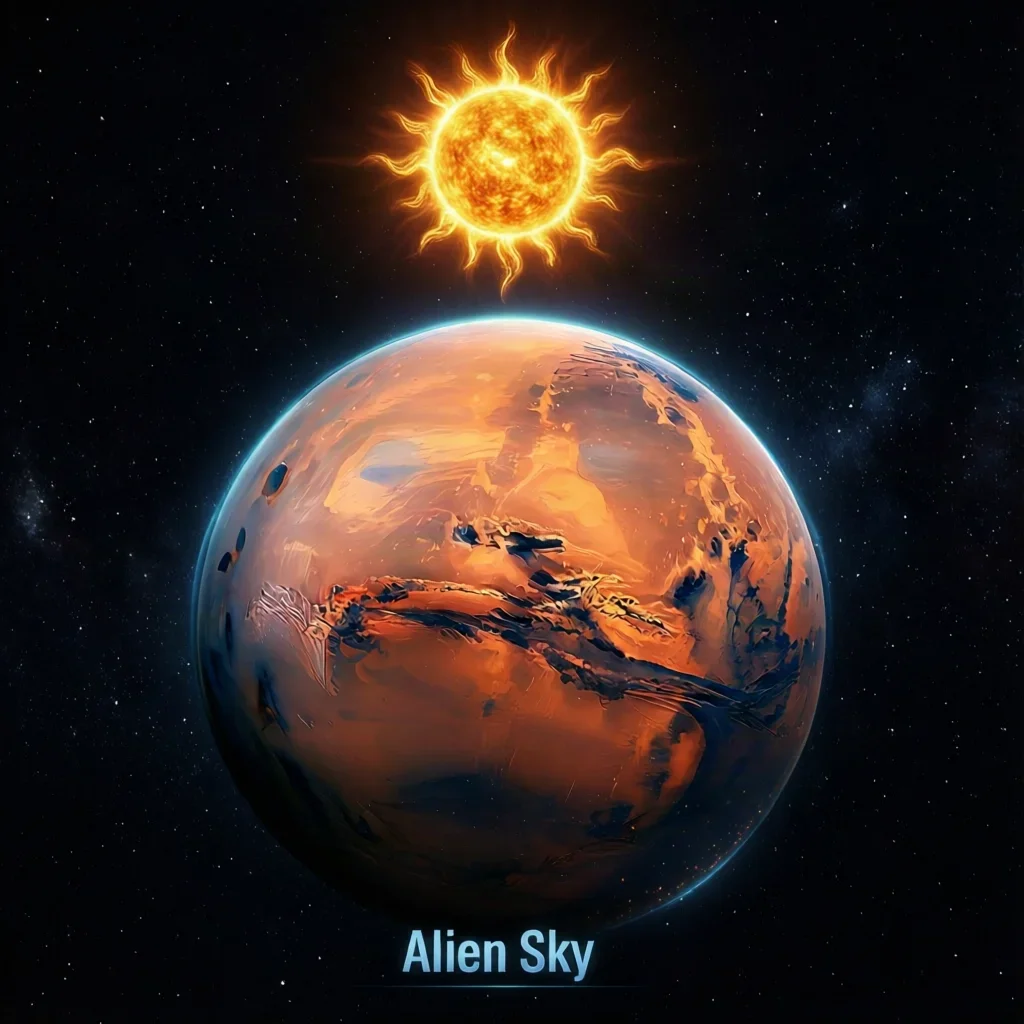
Alien Sky — What Does the Sky Look Like on Other Planets?
Have you ever stood outside, looked up at the stars, and wondered what it would be like to stand on another world?
Not just read about it in a textbook. Not just see a static image. But actually watch the sun set behind an alien horizon, feel the gravity pull you down, and see how old you would be if you lived on Mars or Jupiter.
The universe is massive, and we are stuck on one tiny rock. But our minds don't have to be.
The Alien Sky tool at useminitools.com was built to satisfy that exact curiosity. It is a fully interactive space explorer that lets you visit 9 planets in our solar system and experience what the sky actually looks like from their surface.
What Does the Sky Look Like on Other Planets?
Every planet has a sky. But not every sky looks like ours.
On Earth, our sky is blue during the day and turns orange and red at sunset. That happens because of how sunlight scatters through our atmosphere. But on other planets, the atmosphere is completely different, which means the sky looks completely different.
If you want to know what the sky looks like on other planets, you have to understand that each world has its own rules:
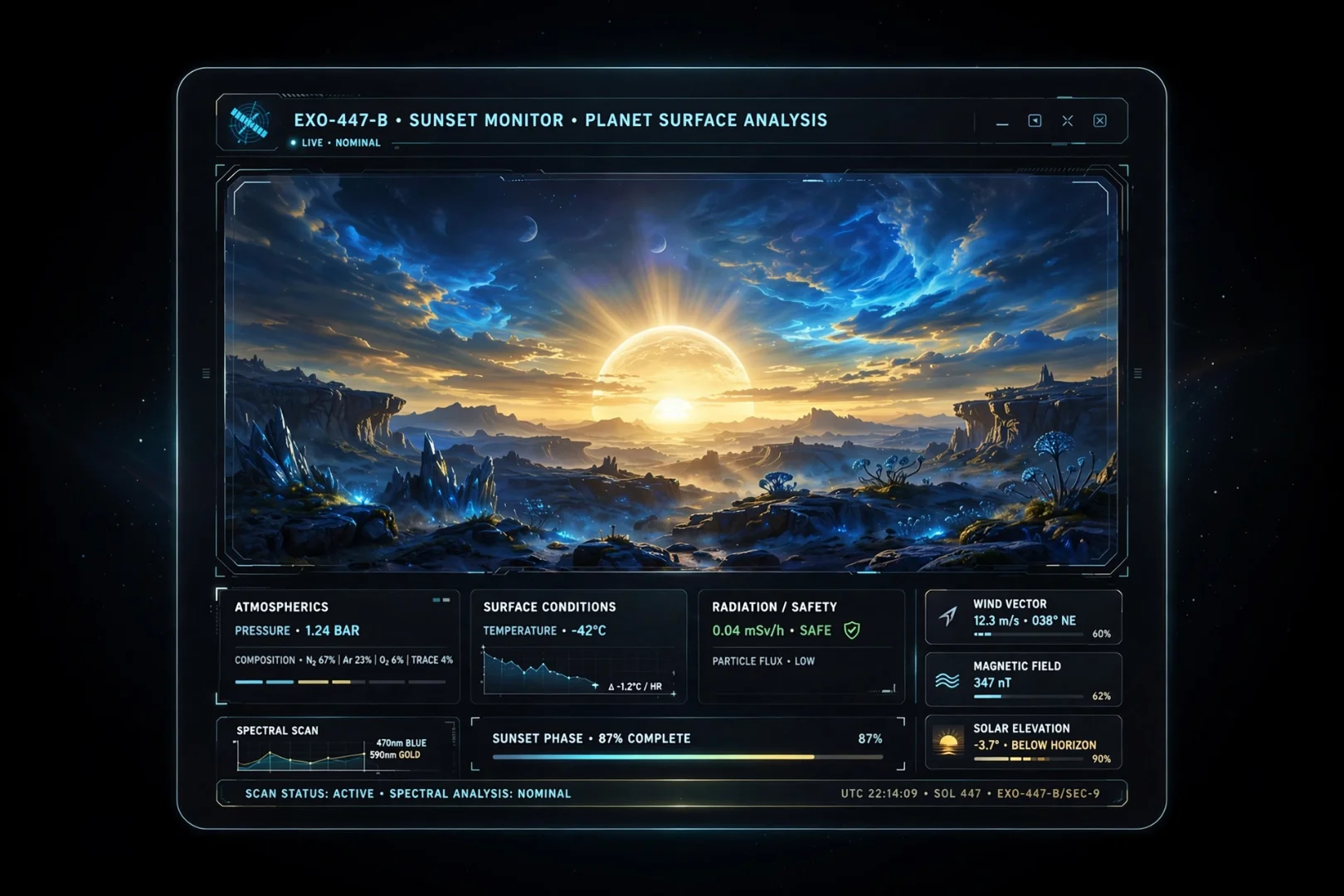
Mars has a pinkish-red sky during the day, but its sunsets are a haunting, beautiful blue. Yes, blue. The opposite of Earth.
Venus has a thick, toxic atmosphere that makes the sky look like a hazy, yellowish soup. You would never see the sun clearly.
Jupiter has no solid surface to stand on, but if you floated in its clouds, the sky would be a swirling mess of orange, brown, and cream stripes.
Mercury has almost no atmosphere at all. The sky would be pitch black, even during the day, and you would see stars while the sun is shining.
The Alien Sky tool at useminitools.com lets you toggle the atmosphere on and off for each planet, so you can see exactly how the sky changes when a planet has no air to scatter the light.
Watch a Sunset on Mars (And Every Other Planet)
Sunsets on Earth are beautiful. But they are predictable.
When you use the Alien Sky explorer, you can click a button and watch a sunset on Mars unfold in real time. The sky slowly shifts from dusty red to a deep, electric blue as the sun dips below the horizon. It is one of the most alien things you can witness without leaving your chair.
But Mars is just the beginning. Every planet in the tool has its own animated sunset:
Mercury: The sun drops into a black, star-filled sky with no color change at all.
Venus: The thick atmosphere creates a hazy, golden glow that never fully gets dark.
Saturn: The sun shrinks to a tiny dot, but the golden haze of the atmosphere creates a warm, dim twilight.
Uranus: The sunset glows a pale, icy cyan, matching the planet's frozen atmosphere.
Neptune: The sky turns a deep, dark indigo as the distant sun disappears.
You can experience all of this for free at useminitools.com without downloading an app or signing up for anything.
How Much Would You Weigh on Other Planets?
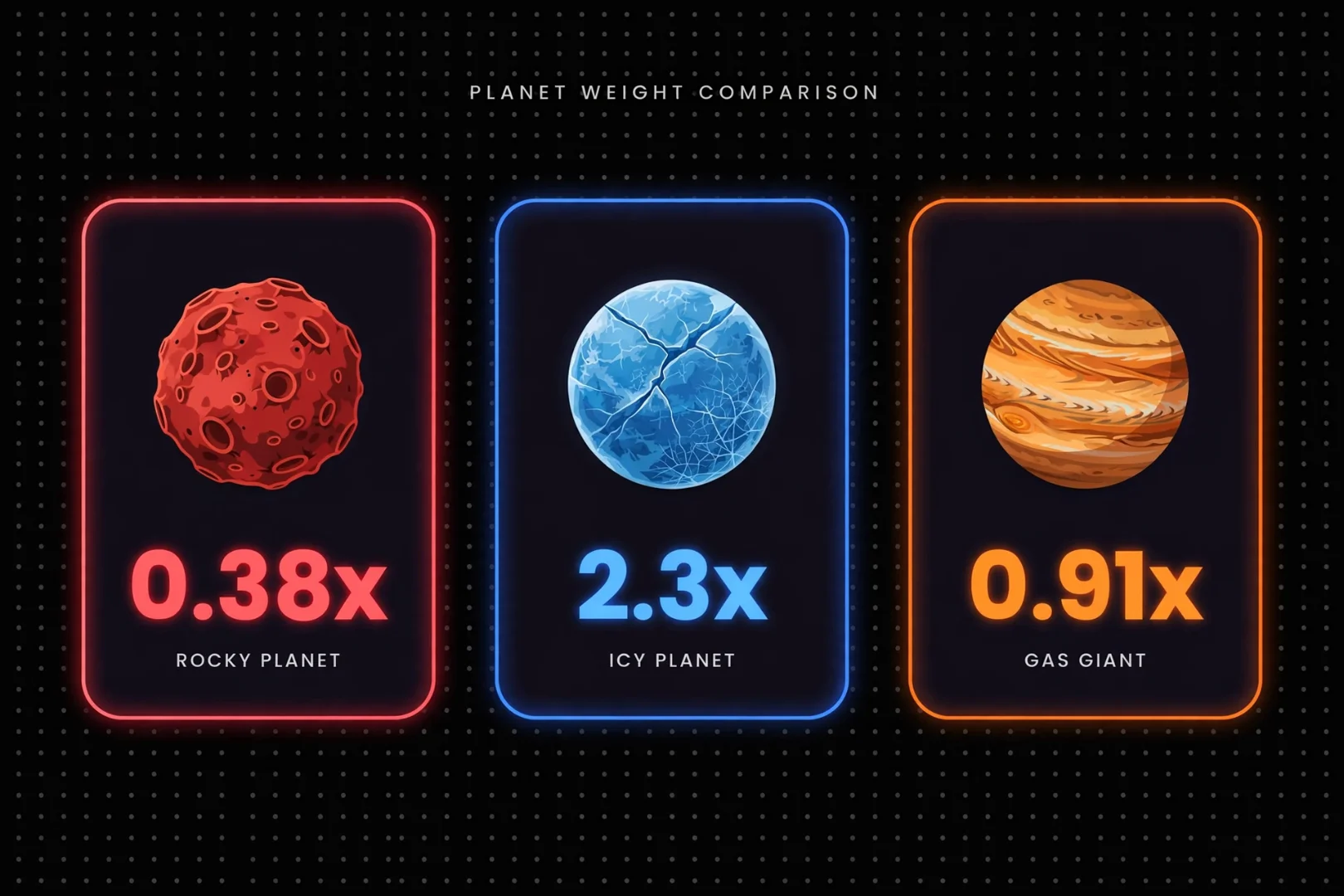
This is one of the most searched space questions on Google, and for good reason. Gravity is different on every planet, which means your weight is different on every planet.
If you weigh 70 kg on Earth, you would weigh:
26.6 kg on Mercury (gravity is only 38% of Earth's)
63.7 kg on Venus (gravity is 91% of Earth's)
177 kg on Jupiter (gravity is 2.53 times Earth's — you would feel crushed)
4.2 kg on Pluto (gravity is only 6% of Earth's — you could practically fly)
The planet weight calculator built into the Alien Sky tool lets you type in your Earth weight and instantly see what you would weigh on any of the 9 planets. It is a fun, humbling experience that puts the power of gravity into perspective.
How Old Am I on Other Planets?
A year is the time it takes a planet to orbit the sun. Because every planet is a different distance from the sun, every planet has a different year length.
Mercury orbits the sun in just 88 days. If you are 30 years old on Earth, you are already 124 years old on Mercury.
Neptune takes 60,190 days to orbit the sun. If you are 30 years old on Earth, you are only 0.18 Neptune years old. You haven't even had your first birthday.
The age on other planets calculator in the Alien Sky tool lets you enter your birth date and instantly see your age on every planet. It is a mind-bending way to understand how time works differently across the solar system.
You can try it yourself at useminitools.com and find out exactly how old you are on Mars, Jupiter, or even Pluto.
The Gravity Test: Drop a Ball on Another World
Gravity doesn't just affect your weight. It affects how things fall.
On Earth, a ball dropped from a height falls at 9.8 m/s². But on the Moon, it falls six times slower. On Jupiter, it falls two and a half times faster.
The Alien Sky tool includes a gravity test that lets you drop a ball on any planet and watch how it falls. You can see the ball drop in slow motion on low-gravity worlds like Mercury and Pluto, and watch it slam into the ground on high-gravity worlds like Jupiter.
It is a small feature, but it makes the concept of gravity instantly understandable in a way that no textbook ever could.
Explore the Solar System: 9 Planets, 9 Worlds
The Alien Sky tool is a complete solar system explorer. You can visit all 9 planets (yes, including Pluto) and learn about each one:
Mercury: The smallest planet, with no atmosphere and extreme temperature swings.
Venus: The hottest planet, with a toxic atmosphere that spins backwards.
Earth: The only planet we know has life (so far).
Mars: The Red Planet, with blue sunsets and the largest volcano in the solar system.
Jupiter: The giant, with 95 moons and a storm that has been raging for 300 years.
Saturn: The ringed beauty, so light it would float in water.
Uranus: The sideways planet, spinning on its side like a rolling ball.
Neptune: The windiest planet, with winds faster than the speed of sound.
Pluto: The dwarf planet, so far from the sun that sunlight takes 5.5 hours to reach it.
Each planet has its own procedurally generated surface, realistic sky colors, and accurate data for gravity, day length, temperature, and orbit speed.
Is This Tool Scientifically Accurate?
The data used in the Alien Sky tool is based on real astronomical data from NASA and the European Space Agency. The gravity values, orbital periods, temperatures, and distances are all accurate.
The visual representations are mathematical approximations. For example, the sunset colors use the same physics equations (Rayleigh scattering) that determine how light bends through an atmosphere. This is why the sunset on Mars in the tool appears blue, just like it does in real photos taken by NASA's rovers.
However, the tool is designed for curiosity and education, not for mission planning. If you want to land a spacecraft on Mars, please use NASA's data, not ours.
Fun Ways to Use the Alien Sky Tool
You don't have to be an astronomer to enjoy this tool. Here are some fun ways to explore:
Find out your weight on Jupiter: Spoiler — it's going to make you feel very heavy.
Check your age on Mercury: If you are feeling old, Mercury will make you feel ancient.
Watch the sunset on Mars: It is blue, and it is haunting.
Drop a ball on Pluto: It falls so slowly it looks like it is floating.
Compare the size of planets: See how tiny Mercury is next to Jupiter.
Show it to a kid: This tool is the perfect way to get a child interested in space and science.
Related Tools for More Curiosity
If you enjoyed exploring the solar system, there are a few other free tools on useminitools.com that might satisfy your curiosity:
3D Molecule Visualizer: Explore the building blocks of the universe. Rotate 100+ molecules in 3D and learn how everything around you is made.
Personality Type Analyzer: Discover your true work personality with 8 fun questions.
Age Calculator: Find your exact age in years, months, days, and even seconds. Includes zodiac signs and planet ages.
Past Life Calculator: Discover who you were in a past life based on your birth date.
Frequently Asked Questions
What is the Alien Sky tool?
The Alien Sky tool is a free, interactive space explorer that lets you visit 9 planets in our solar system and experience what the sky, sunsets, gravity, and time feel like on each one.
Is the sunset on Mars really blue?
Yes. NASA's Curiosity rover has photographed sunsets on Mars, and they are indeed blue. This happens because Mars has a thin atmosphere filled with fine dust particles that scatter blue light more than red light, which is the opposite of what happens on Earth.
How does the weight calculator work?
The weight calculator uses the known gravity of each planet. If you weigh 100 kg on Earth, the tool multiplies your weight by the planet's gravity relative to Earth. For example, Jupiter's gravity is 2.53 times Earth's, so you would weigh 253 kg on Jupiter.
Can I see the sky on Pluto?
Yes. The Alien Sky tool includes Pluto as one of the 9 planets you can explore. The sky on Pluto is pitch black because the sun is so far away that it looks like a bright star.
Is the Alien Sky tool free to use?
Yes. The tool is 100% free, requires no signup, and everything runs instantly in your browser at useminitools.com.
How old would I be on Mercury?
Because Mercury orbits the sun in just 88 days, your age on Mercury is much higher than on Earth. If you are 30 years old on Earth, you are approximately 124 years old on Mercury. You can calculate your exact age on Mercury using the tool.
Because the Universe Is Worth Wondering About
We spend most of our lives looking down. Down at our phones, down at our desks, down at the ground beneath our feet.
But every once in a while, it is worth looking up.
The sky on Mars is blue at sunset. The sun on Mercury is a tiny, piercing dot in a black sky. The gravity on Jupiter would crush you. The year on Pluto is 248 Earth years long.
These are not science fiction. These are real places, floating in the dark, waiting to be understood.
The Alien Sky tool at useminitools.com won't take you there. But it will let you stand on the surface, watch the sun set, and feel the gravity pull you down.
And sometimes, that is enough to remind you how big the universe really is.
Pick a planet. Watch the sunset. Drop the ball. Calculate your age.
Then come back to Earth and look up at the stars with a little more wonder than you had before.
Cipher
Founder & Lead Developer, ToolKit
Cipher is an independent developer who prefers to let the work speak for itself. They designed and coded every tool on ToolKit to ensure they remain fast, private, and beautifully designed for everyone. No fame, no face — just premium tools that work.
